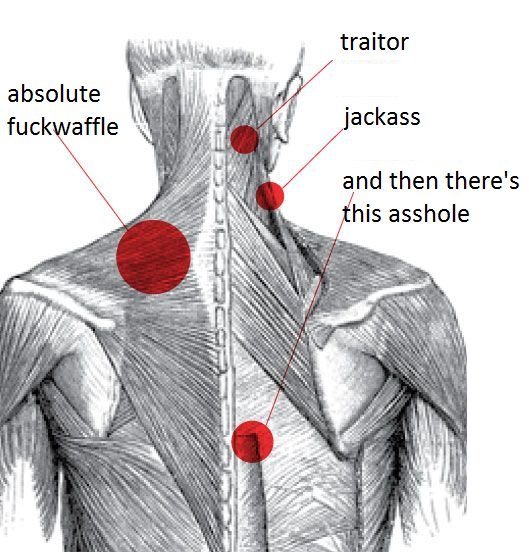
For Traitor: neck retraction exercise. While lying in bed with your head flat against the mattress, give yourself the biggest double chin you can. Repeat 10 times.
For Jackass: stop hiking your shoulders up to your ears. This is pretty much a stress thing, it’s human instinct to protect our neck when we’re under stress so that predators can’t get at it. Easiest way to do that is be elevating the shoulders, so. Periodically take not of where your shoulders are at.
Absolute Fuckwaffle: stretch out your chest. The rhomboids on the back work to keep our shoulder blades back, so when we’re hunched forward they are constantly straining to do their job. Unfortunately it’s not as simple as telling you to stand up straight, since our pectorals get chronically tight and prevent us from doing so. Step one: pectoral stretches. Hold for at least 20 seconds.
Asshole: Superman exercises. Like the rhomboids, the ESGs are straining against the slump. Stretching the chest will help them, too, but then you e got to strengthen your back. Do 20 of those per day.
traitor tried to murder me last night and fuckwaffle is always up on my shit
wtf are superman exercises, this asshole throws sporadic life ruining tantrums. best thing i know for it is lat pull down but it’s hard to stay aligned trying to simulate that motion at home with no equipment.
also if anyone has home tactics that work on the dickwad at the extreme upper front of the thigh,
Lie down on floor prone. Stick arms out and forward, legs out and backward, off the floor, like superman’s flying posture.
sounds traumatic tbh but i’ll give it a shot tonight.
they are indeed hardcore awful, but they really help strengthen that area
it’s hilarious to me when people call historical fashions that men hated oppressive
like in BuzzFeed’s Women Wear Hoop Skirts For A Day While Being Exaggeratedly Bad At Doing Everything In Them video, one woman comments that she’s being “oppressed by the patriarchy.” if you’ve read anything Victorian man ever said about hoop skirts, you know that’s pretty much the exact opposite of the truth
thing is, hoop skirts evolved as liberating garment for women. before them, to achieve roughly conical skirt fullness, they had to wear many layers of petticoats (some stiffened with horsehair braid or other kinds of cord). the cage crinoline made their outfits instantly lighter and easier to move in
it also enabled skirts to get waaaaay bigger. and, as you see in the late 1860s, 1870s, and mid-late 1880s, to take on even less natural shapes. we jokingly call bustles fake butts, but trust me- nobody saw them that way. it was just skirts doing weird, exciting Skirt Things that women had tons of fun with
men, obviously, loathed the whole affair
(1864)
(1850s. gods, if only crinolines were huge enough to keep men from getting too close)
(no date given, but also, this is 100% impossible)
(also undated, but the ruffles make me think 1850s)
it was also something that women of all social classes- maids and society ladies, enslaved women and free women of color -all wore at one point or another. interesting bit of unexpected equalization there
and when bustles came in, guess what? men hated those, too
(1880s)
(probably also 1880s? the ladies are being compared to beetles and snails. in case that was unclear)
(1870s, I think? the bustle itself looks early 1870s but the tight fit of the actual gown looks later)
hoops and bustles weren’t tools of the patriarchy. they were items 1 and 2 on the 19th century’s “Fashion Trends Women Love That Men Hate” lists, with bonus built-in personal space enforcement
Gonna add something as someone who’s worn a lot of period stuff for theatre:
The reason you suck at doing things in a hoop skirt is because you’re not used to doing things in a hoop skirt.
The first time I got in a Colonial-aristocracy dress I felt like I couldn’t breathe. The construction didn’t actually allow me to raise my arms all the way over my head (yes, that’s period-accurate). We had one dresser to every two women, because the only things we could put on ourselves were our tights, shifts, and first crinoline. Someone else had to lace our corsets, slip on our extra crinolines, hold our arms to balance us while a second person actually put the dresses on us like we were dolls, and do up our shoes–which we could not put on ourselves because we needed to be able to balance when the dress went on. My entire costume was almost 40 pounds (I should mention here that many of the dresses were made entirely of upholstery fabric), and I actually did not have the biggest dress in the show.
We wore our costumes for two weeks of rehearsal, which is quite a lot in university theatre. The first night we were all in dress, most of the ladies went propless because we were holding up our skirts to try and get a feel for both balance and where our feet were in comparison to where it looked like they should be. I actually fell off the stage.
By opening night? We were square-dancing in the damn things. We had one scene where our leading man needed to whistle, but he didn’t know how and I was the only one in the cast loud enough to be heard whistling from under the stage, so I was also commando-crawling underneath him at full speed trying to match his stage position–while still in the dress. And petticoats. And corset. Someone took my shoes off for that scene so I could use my toes to propel myself and I laid on a sheet so I wouldn’t get the dress dirty, but that was it–I was going full Solid Snake in a space about 18″ high, wearing a dress that covered me from collarbones to floor and weighed as much as a five-year-old child. And it worked beautifully.
These women knew how to wear these clothes. It’s a lot less “restrictive” when it’s old hat.
I have worn hoop skirts a lot, especially in summer. I still wear hoop skirts if I’m going to be at an event where I will probably be under stage lights. (For example, Vampire Ball.)
I can ride public transportation while wearing them. I can take a taxi while wearing them. I can go on rides at Disneyland while wearing them. Because I’ve practiced wearing them and twisting the rigid-but-flexible skirt bones so I can sit on them and not buffet other people with my skirts.
Hoop skirts are awesome.
Hoop skirts are also air conditioning. If you ever go to reenactments in the South, particularly in summer, you’ll notice a lot of ladies gently swaying in their big 1860s skirts – because it fans all the sweaty bits. You’ll be much cooler in a polished cotton gown with full sleeves, ruffles, and hoopskirt than in a riding jacket and trousers, let me promise you! (This is part of the reason many enslaved women also enthusiastically preferred larger skirts – they had more to do than sit in the shade, but they’d get a bit of a breeze from the hoops’ movement as they were walking.)
They’re also – and I can’t emphasize enough how important this is – really easy to pee in. If you’re in split-crotch drawers (which, until at least the 1890s, you were), you can take an easy promenade a few feet away from the gents and then squat down and pee in pretty much total privacy. It gives so much freedom in travel when it’s not a problem to pee most anywhere.
People also don’t realize that corsets themselves were a HUGE HUGE IMPROVEMENT over previous support-garment styles – and if you have large breasts that don’t naturally float freely above your ribcage (which some people’s do! but it’s not that common), corsets are often an improvement over modern bras.
They hold up the breasts from underneath, taking the weight of them off your back. Most historical corset styles don’t have shoulder straps, so you’re not bearing the weight of your breast there, either, and you can raise your arms as far as your dress’s shoulder line allows (which is the actually restrictive bit – in my 1830s dress, literally all I can do is work in my lap, but in my 1890s dress I can paddle a kayak or draw a longbow with no trouble. Both in a full corset). They support your back and reduce the physical effort it takes to not slouch, helping avoid back pain. They’re rigid enough that you don’t usually have to adjust your clothing to keep it where it belongs. They’re flexible – if you’re having a bloaty PMS day you just … don’t lace it as tightly, and if your back muscles are sore you can lace it a little tighter. And you can undo a cup (or, y’know, not have breast cups) to nurse a baby without losing any of the structural integrity of the garment.
I do educational/historical dressing and people are really insistent, like, “The corset was invented by a man, wasn’t it?” “Actually, women were at the forefront of changing undergarment styles throughout the 19th century!” “But it’s true that it was invented by a man.”
Uh, well, it’s hard to say who “invented” the style but it’s very likely that women’s dressmakers mostly innovated women’s corsets and men’s tailors mostly innovated men’s corsets, honey. Because those exist too.
Games often overestimate how much a sword or an axe weighs, and the assumption that many people make is that this lump of steel in your hand is a great burden, although this assumption has been working is way out.
The simple fact of the matter is, medieval weapons are quite light.
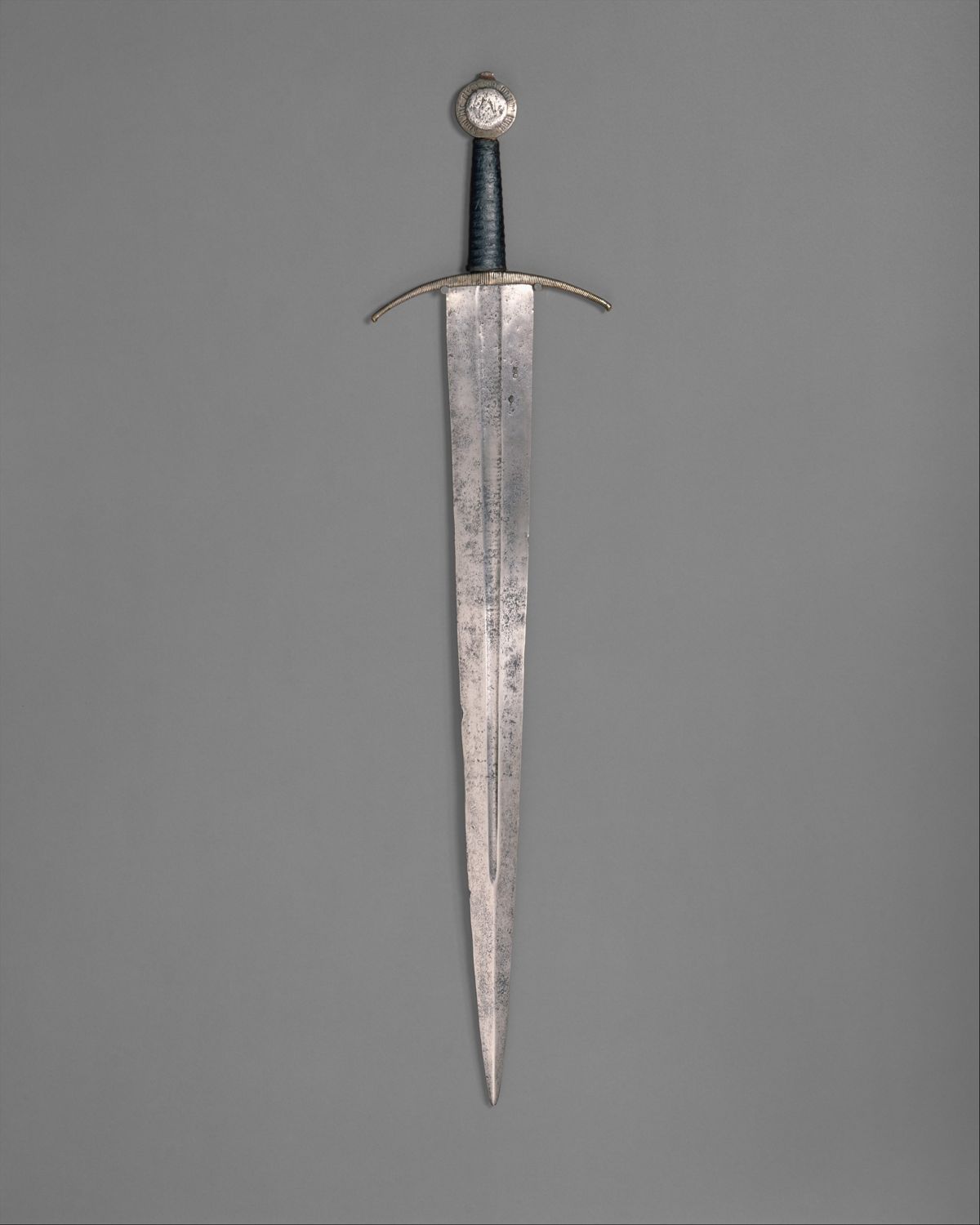
The medieval Arming Sword, the single most common sword of the middle ages. One handed, ext to carry, you wouldn’t expect this one to be that heavy, and it isn’t. Arming Swords tend to weigh between 3 and 4 pounds / 1⅓ and 1.8kg, that’s it! This particular example weighs 3 lbs. 11 oz / 1.6kg.
The Longsword, a much longer weapon than the Arming Sword, as the name implies, and obviously much heavier. But it’s not.
Standard Longswords, especially later period ones designed more for thrusting (like the one pictured above,) can be shockingly light. They can weigh in the same range as arming swords, although they can weigh more as well.
Longswords tend to sit between 3 and 5 pounds /
1⅓ and 2.25kg, and this example is 3 lbs. 7oz. / 1.5kg meaning it weighs less than the Arming Sword pictured before!
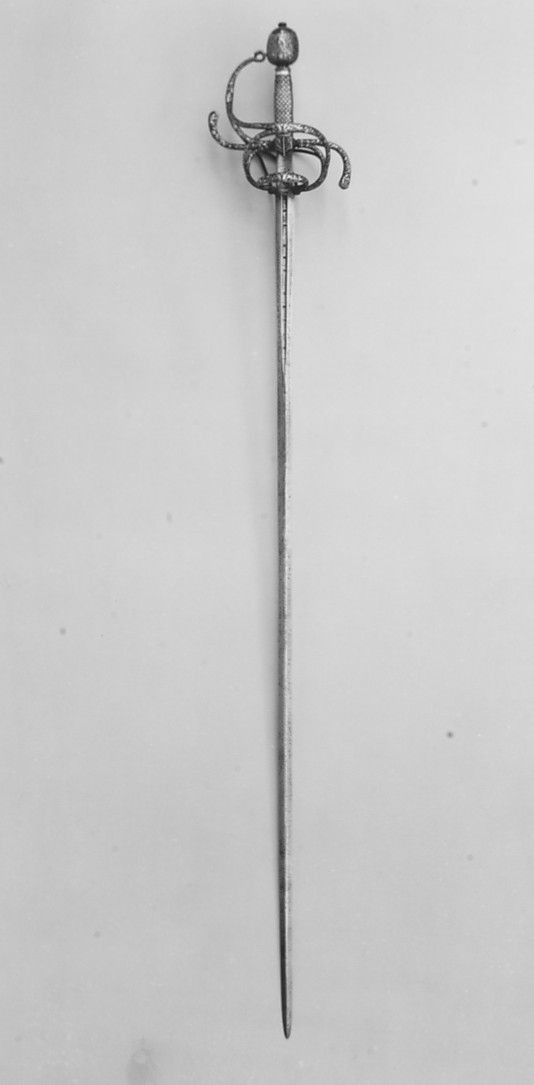
The Rapier, a famously light and nimble weapon that is also clouded in a fog of incorrect assumptions. The rapier is a long weapon. This example measures 45 inches in the blade and isn’t even among the longest I’ve seen.
Including all that weight from the steel basket around your hand, and it starts to add up. Rapiers can however be quite light, so including the extremes of the spectrum you end up with a range of between 2.5 pounds and 5 pounds / 1.1 and
2.25kg. This particular example is on the lighter side, weighing 2 lbs. 13 oz / 1.3kg.
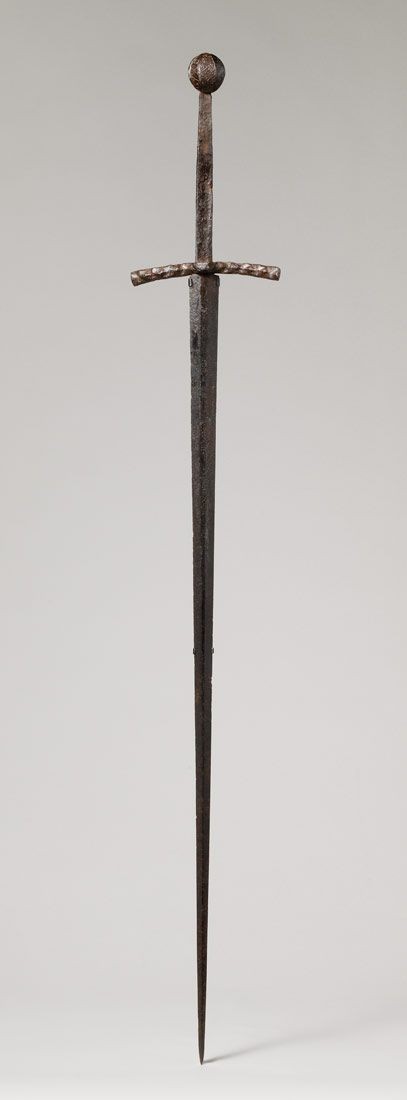
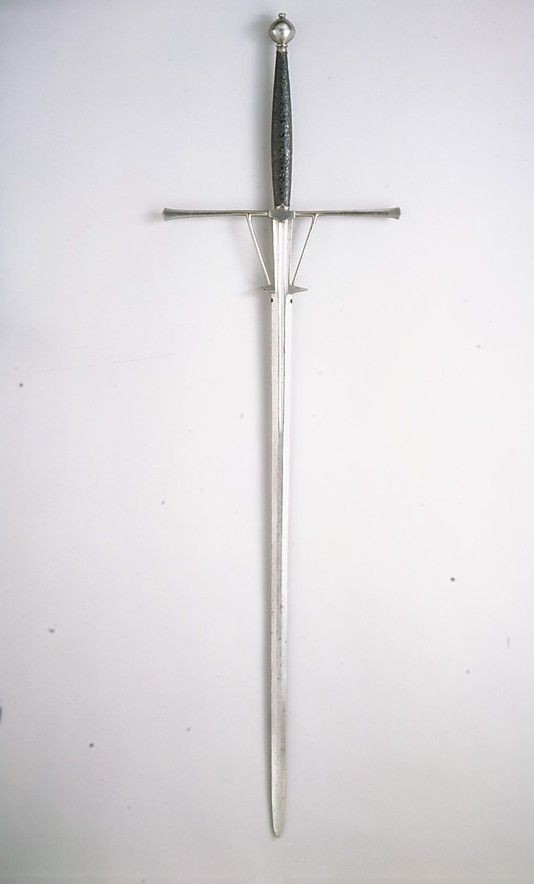
The Zweihander, the famous greatsword, surely this is a much heavier weapons! Well of course it’s heavier than the others, the entire thing is five and a half feet tall, however they are deceptively light.
Zweihander weigh, on average, 6 pounds / 2.7kg. That’s it, only 6 pounds. Some on the heavier side weigh about 7lbs / 3.1kg, but they rarely exceed that. This example weighs 6 lbs. 2 oz. / 2.8kg.
Moving away from swords, axes will surely be heavier, won’t they? Think again.
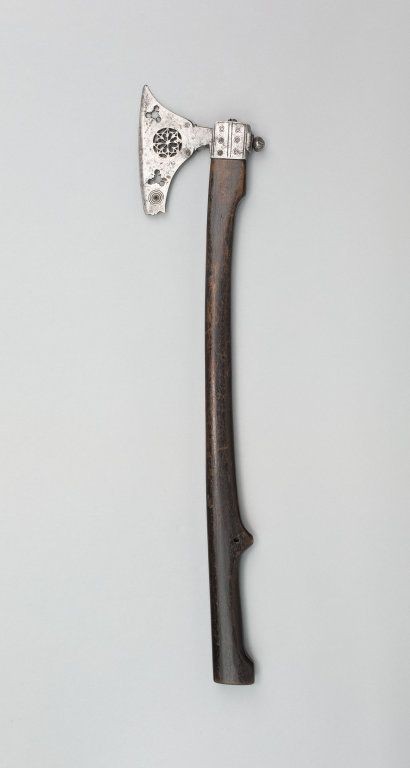
There is an important distinction between battle axes and wood cutting axes. Battle Axe heads tend to be thin, very thin, good for cutting flesh and bone, and easier to wield. Wood cutting heads are wider so as to be more robust, and split wood open more efficiently, and let’s not even talk about splitting mauls.
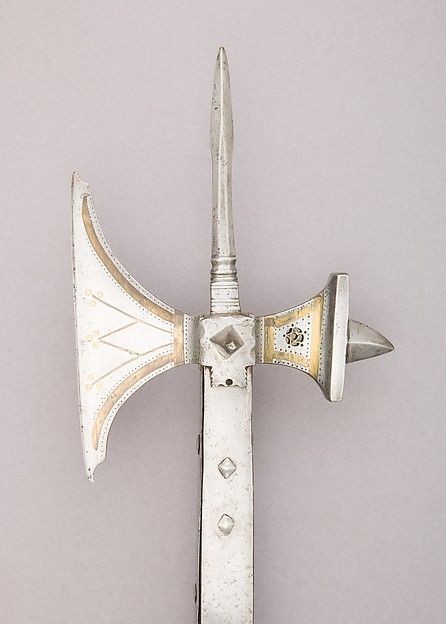
As such, one handed battle aces like this tend only to weigh between 1 and 4 pounds / 0.45 and 1.8kg. They can be very very light! The example is 1 lb. 7 oz. / 0.65kg.
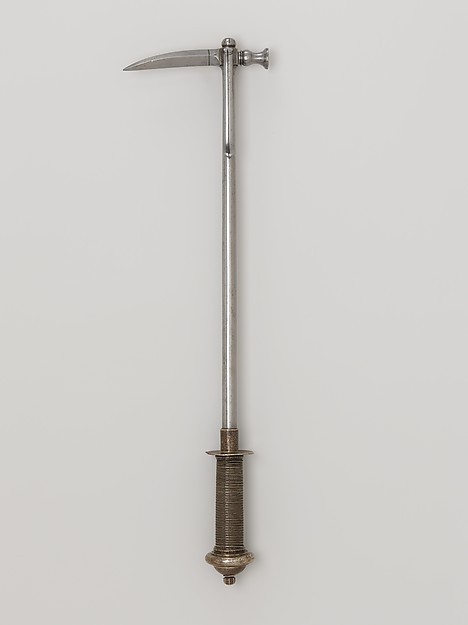
Warhammer even tend to stick to that same range, between 1 and 4 pounds / 0.45 and 1.80. This example is 2 lbs. 8 oz / 1.15kg.
It’s only once you reach polearms that you begin getting heavier weights. The weights of a polearm is greatly changed by the length of it’s shaft, which can vary greatly, so these numbers will be somewhat more flexible.
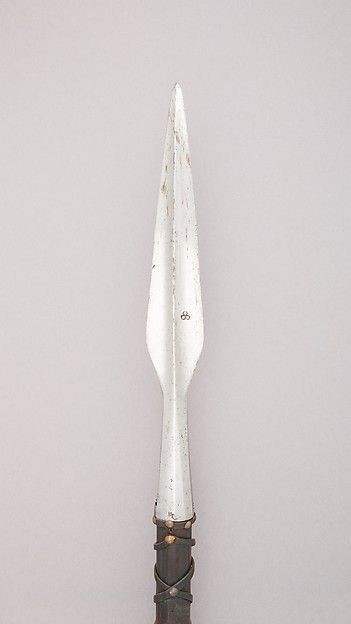
Spears tend to be the lightest polearms, often weighing between 3 and 6 pounds / 1.⅓ and 2.7kg, with this example coming in at 4 lbs. even / 1.8kg.
Poleaxes, tending to be on the shorter end of polearms, also tend to be lighter. Interestingly, the examples I’ve seen are quite consistent, and all weigh between 6 and 7 pounds / 2.7 and 3.175kg, though greater variation is possible. This example weighs 6 lbs. 9 oz / 3kg.
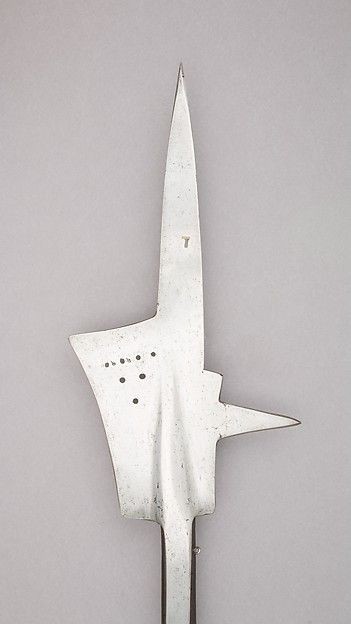
Halberds tend to be even heavier, though examples in museums tend to have hafts that are too short simply for storage and display purposes.
As such, the weights tend to be somewhat off, however we know from period sources and good modern reproductions that properly sized balberds tend to be about 8 pounds. This museum piece fits the “too light” mould, and weighs 5 lbs. 10 oz / 2.5kg.
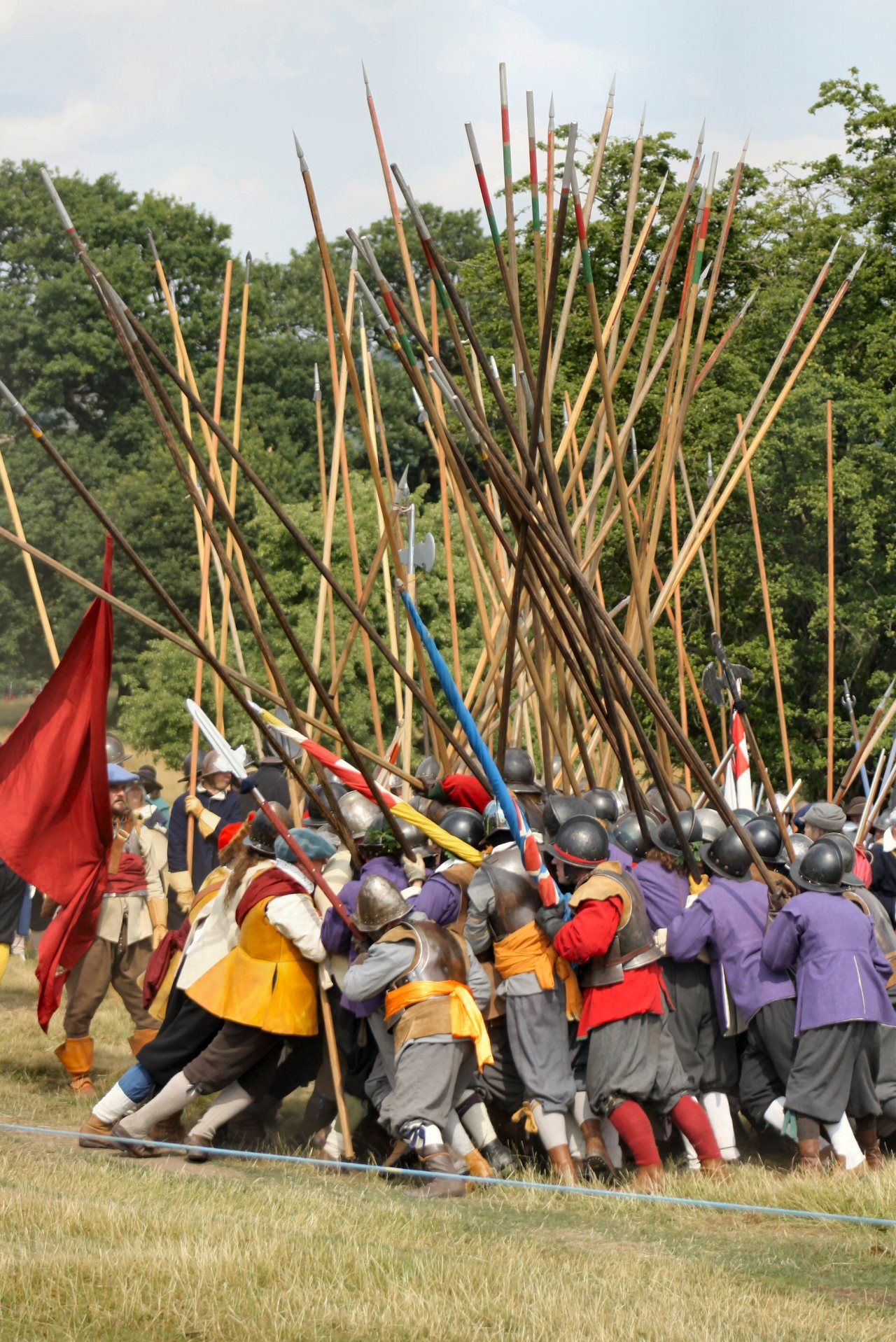
For the purposes of giving you (the reader) a proper appreciation of what the pike is, I elected to not use a museum photo for this one, so you can see their full scale.
The pike is a massive weapon, and these piles being used by reenactors in this photo are quite short. On the shorter end, they measured over 10 feet / 3m in length, and on the lookout get end occasionally hit 30 feet / 9.1m !
These could be the heaviest melee weapons typically used in medieval/renaissance warfare, and even these only weigh between 5 and 13 pounds / 2.25 and 5.9kg.
With your heaviest weapons only weighing 13 pounds at their most extreme, this paints a good picture of how light these hand weapons tended to be. Something for RPG and video game developers to keep in mind in the future.
– mod Armet
Seriously, I’ve packed textbooks that weigh more than most swords I’ve carried.
Make sure to follow us on Tumblr for your regular dose of space: http://nasa.tumblr.com.A human journey to Mars, at first glance, offers an inexhaustible amount of complexities. To bring a mission to the Red Planet from fiction to fact, our Human Research Program has organized hazards astronauts will encounter on a continual basis into five classifications. (View the first hazard). Let’s dive into the second hazard:
Overcoming the second hazard, isolation and confinement, is essential for a successful mission to Mars. Behavioral issues among groups of people crammed in a small space over a long period of time, no matter how well trained they are, are inevitable. It is a topic of study and discussion currently taking place around the selection and composition of crews.
On Earth, we have the luxury of picking up our cell phones and instantly being connected with nearly everything and everyone around us.
On a trip to Mars, astronauts will be more isolated and confined than we can imagine.
Sleep loss, circadian desynchronization (getting out of sync), and work overload compound this issue and may lead to performance decrements or decline, adverse health outcomes, and compromised mission objectives.
To address this hazard, methods for monitoring behavioral health and adapting/refining various tools and technologies for use in the spaceflight environment are being developed to detect and treat early risk factors. Research is also being conducted in workload and performance, light therapy for circadian alignment or internal clock alignment, and team cohesion.
Exploration to the Moon and Mars will expose astronauts to five known hazards of spaceflight, including isolation and confinement. To learn more, and find out what the Human Research Program is doing to protect humans in space, check out the “Hazards of Human Spaceflight” website. Or, check out this week’s episode of “Houston We Have a Podcast,” in which host Gary Jordan further dives into the threat of isolation and confinement with Tom Williams, a NASA Human Factors and Behavior Performance Element Scientist at the Johnson Space Center.
Make sure to follow us on Tumblr for your regular dose of space: http://nasa.tumblr.com.






 screaming into the void since '89